„The Wind Phone – in Japanese” Kaze no denwa - was created as a way of talking to those who are no longer physically with us.
(...) After his cousin died, Itaru Sasaki missed their conversations on the telephone. He placed an old rotary telephone in a phone booth in his garden. Its cable hung loose. Mr Sasaki would pick up the receiver and begin to speak, believing that the wind would carry his words.
(...) In December 2020, I contacted Mr Sasaki. He agreed to the Wind Phone being installed in Warsaw. He wrote:"Kaze no denwa is a place where everyone can express their feelings for those they miss and can no longer talk to. The wish to make contact, interrupted by death, turns into sadness and despair. But believing that contact is still possible brings hope. The telephone is not connected to anything; it is faith that creates the connection. That is the power of human imagination.”(...) The Wind Phone may help those who would like to talk to loved ones who have died but do not know how or where to do so. It is for people who did not have the chance to say goodbye to those they love.
Katarzyna Boni
The design of the Wind Phone booth was developed in 2021, as the world was beginning to return to what was described as normal life after the pandemic. The initiative came from my friend, writer and journalist Katarzyna Boni. During a visit to Japan, she encountered the idea of the Wind Phone and decided to create a place of this kind in Warsaw.
At the same time, refugees from Ukraine were arriving in Poland, many of them having lost family members and friends. The idea of a telephone that offers a symbolic way to speak to those who are absent therefore became even more relevant
The guiding principle of the concept was „as little design as possible”I wanted the place not to draw attention through its form, and not to be provocative or overly literal. A restrained, minimalist design might have looked too contemporary and said too much in its own right.
I felt the best approach would be to let the booth blend into its surroundings, making it familiar and welcoming — almost ordinary, perhaps reminiscent of an earlier era and referring to the original booth created by Itaru Sasaki.
Simply a telephone booth that attracts curiosity only because it stands in a place where nobody would probably have thought to put one, even back when public telephone booths were part of everyday life.
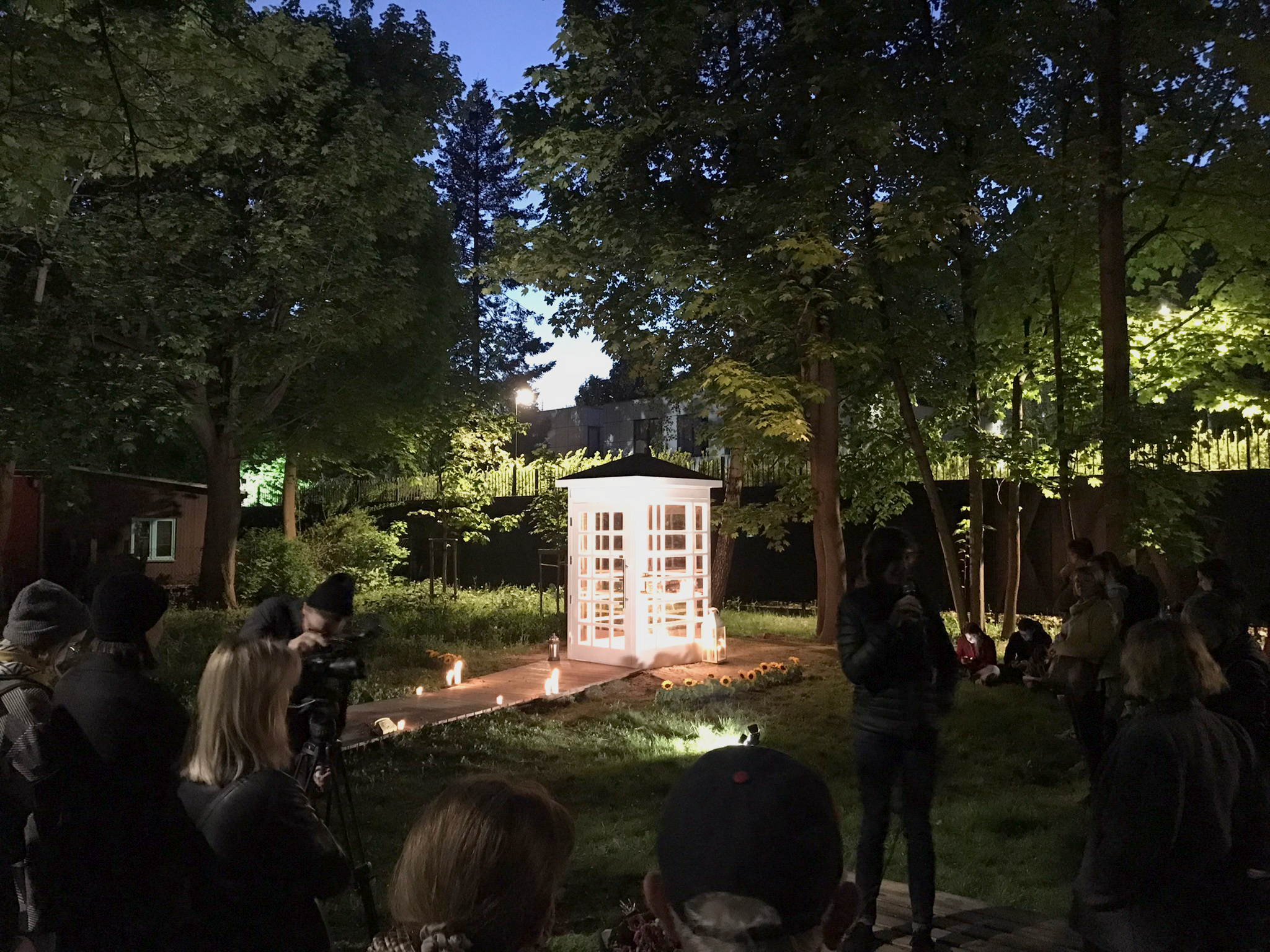
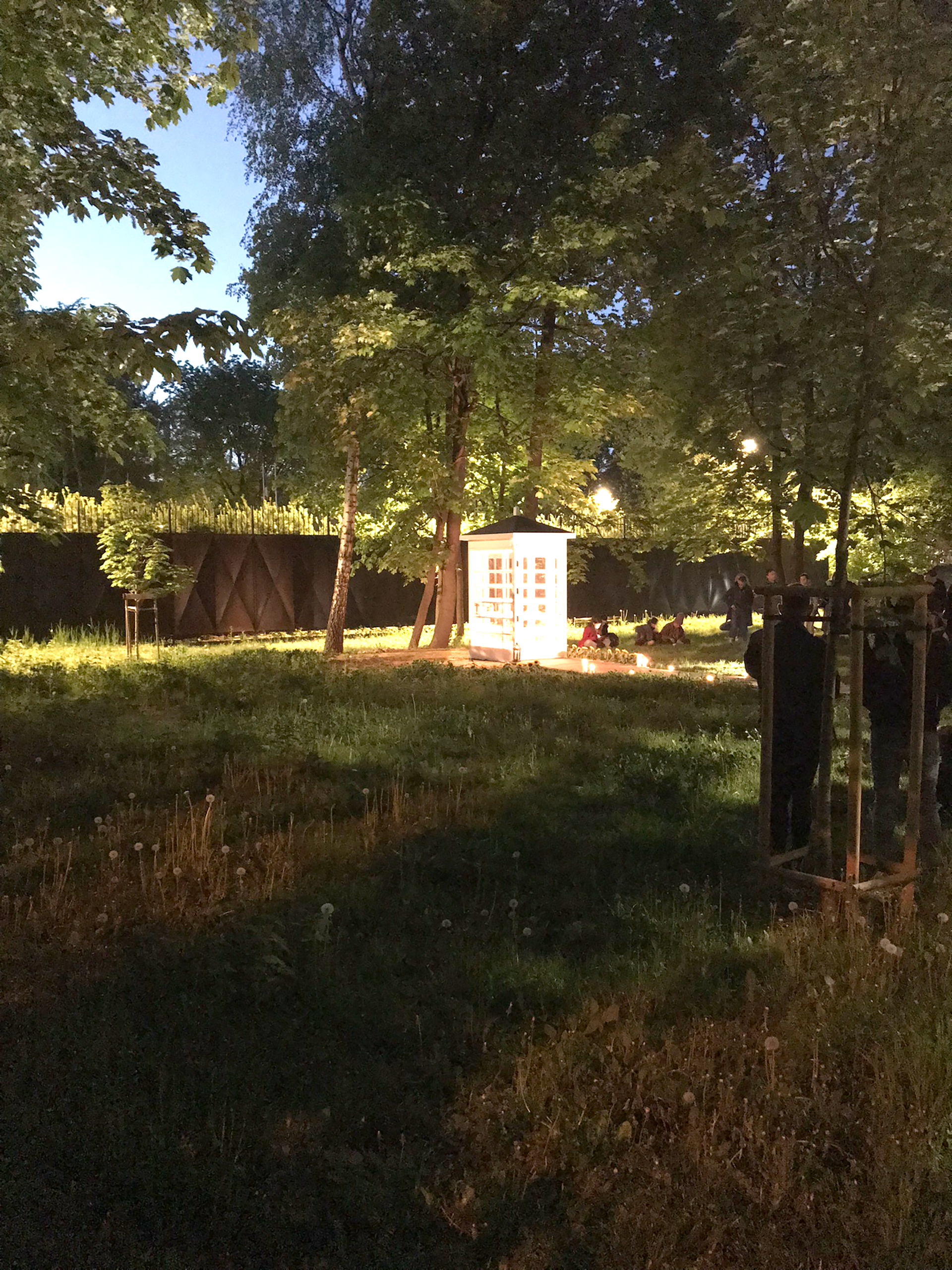
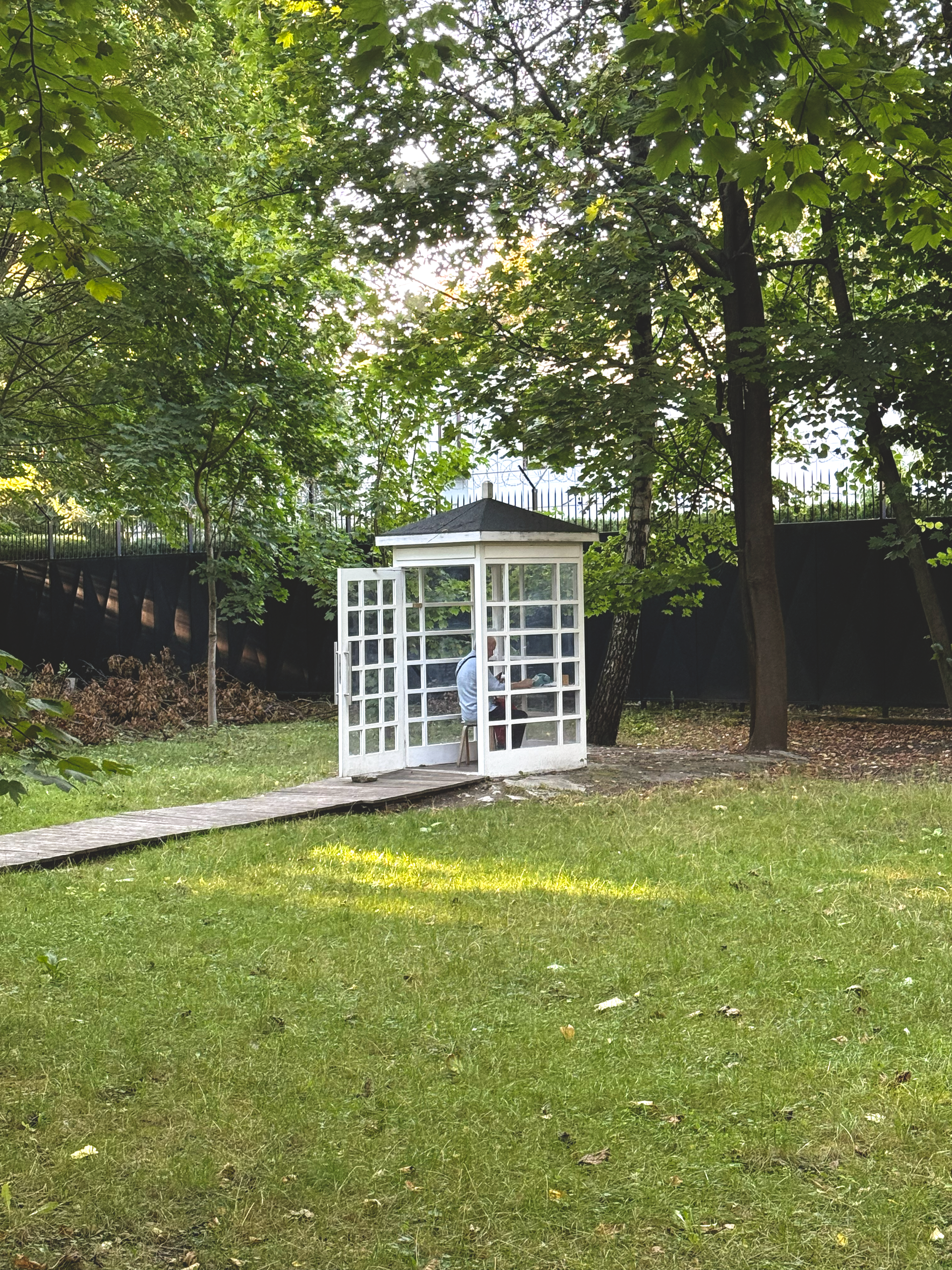
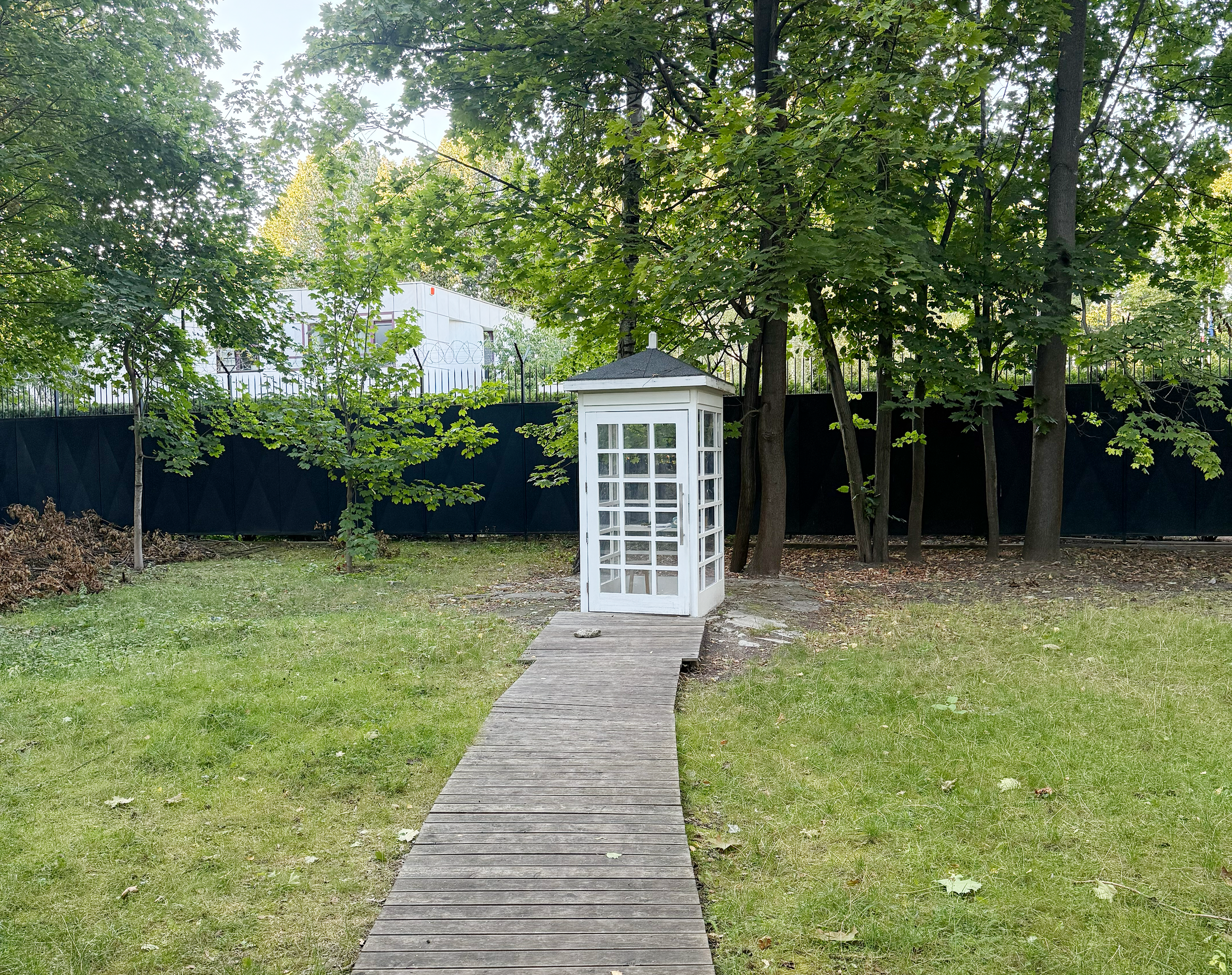
The booth stands on the site of a demolished Finnish house on Jazdów Street in Warsaw, opposite the German Embassy.
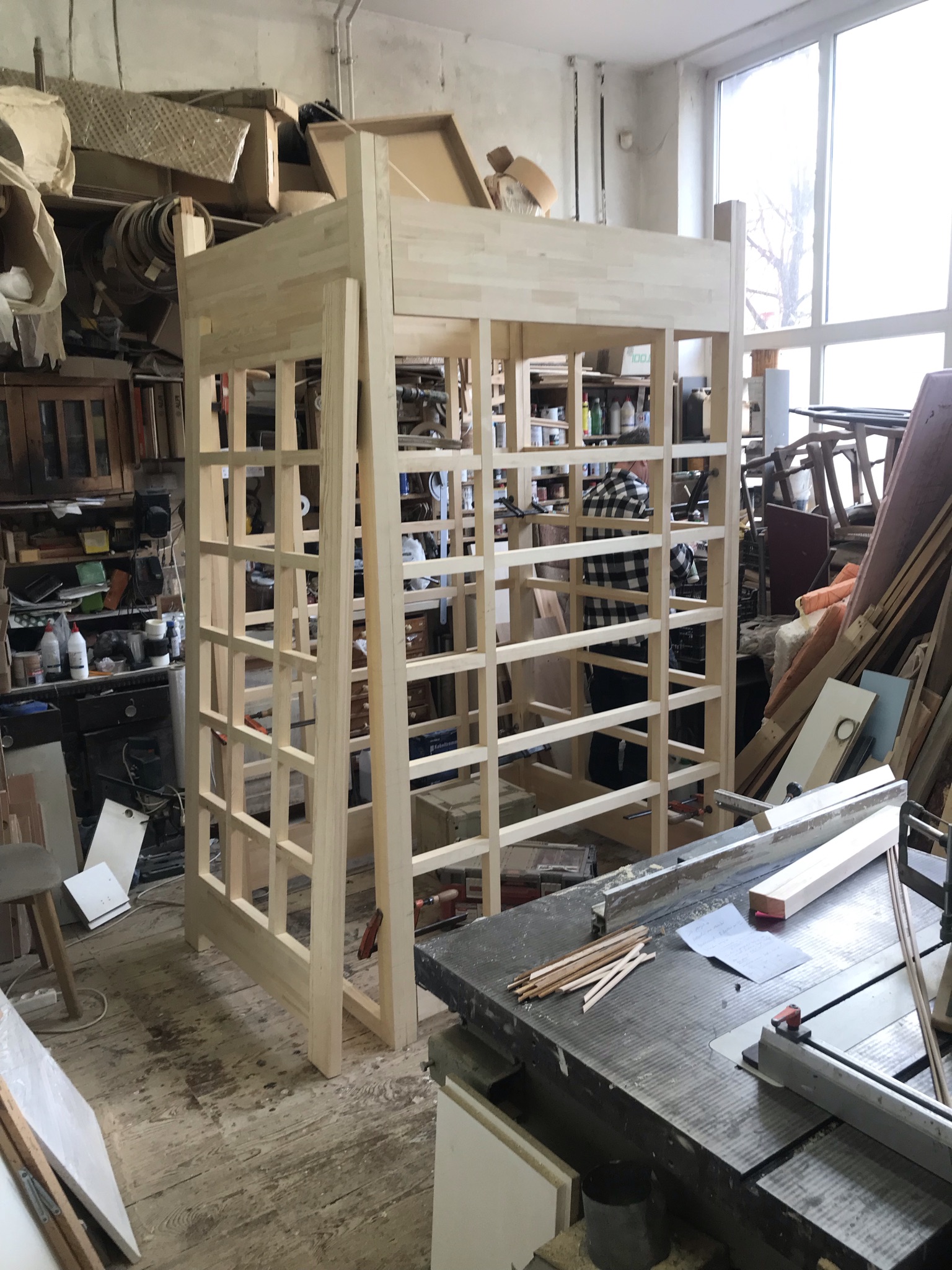
It was made from solid timber by a local carpenter from Mokotów, Mr Adam from Różana Street. Inside, there is a disconnected telephone and a white notebook where visitors can write their own words and read about the idea behind the place.
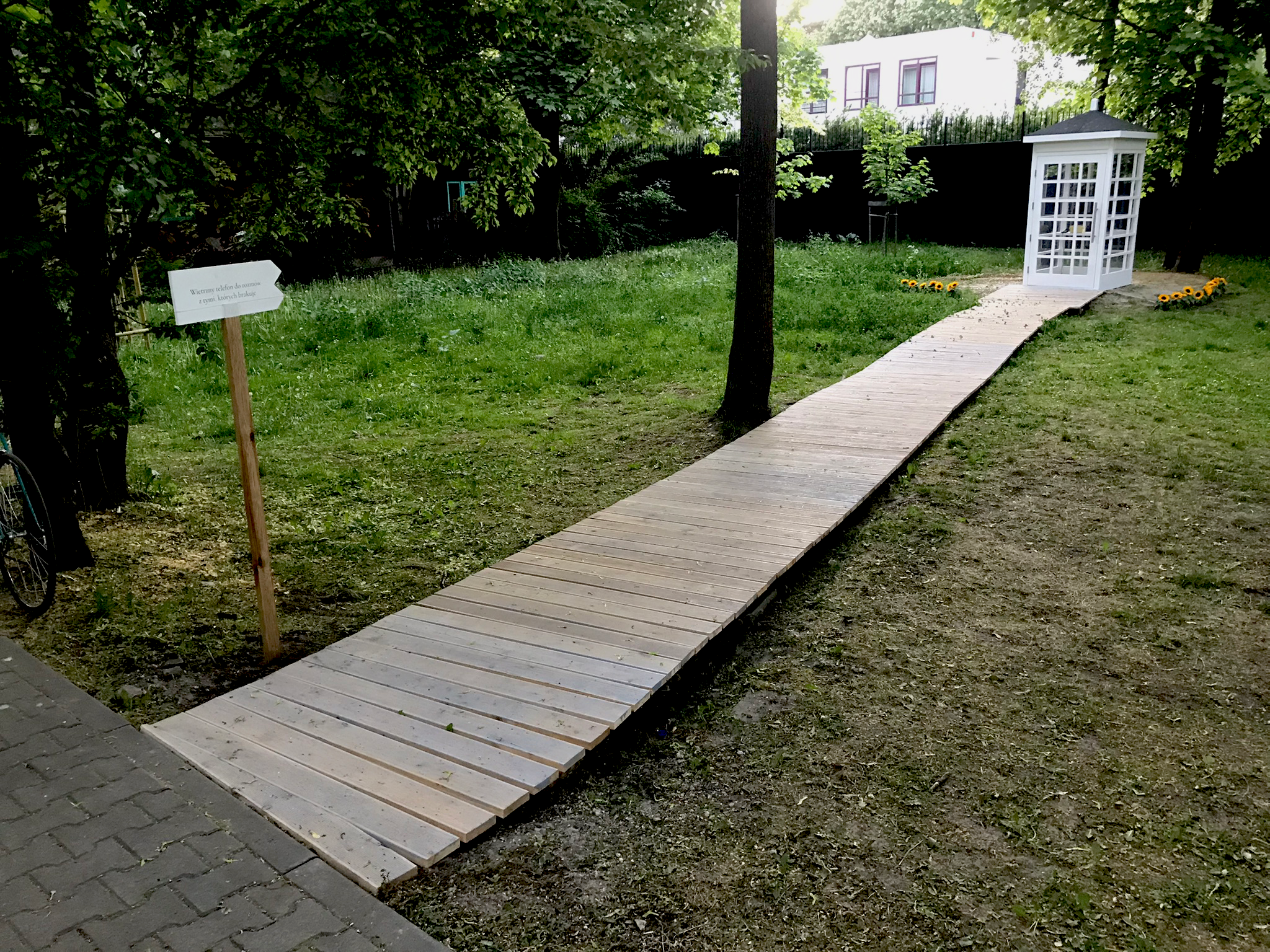
A wooden path leads to the booth and is accessible to wheelchair users. A small sign points the way.
The number of notebooks filled during the first year showed us that the project was working: many people had visited, and it may have helped some of them.
The booth is now cared for by Warszawski Dom Ukojeniawhich looks after its condition and the surrounding area.