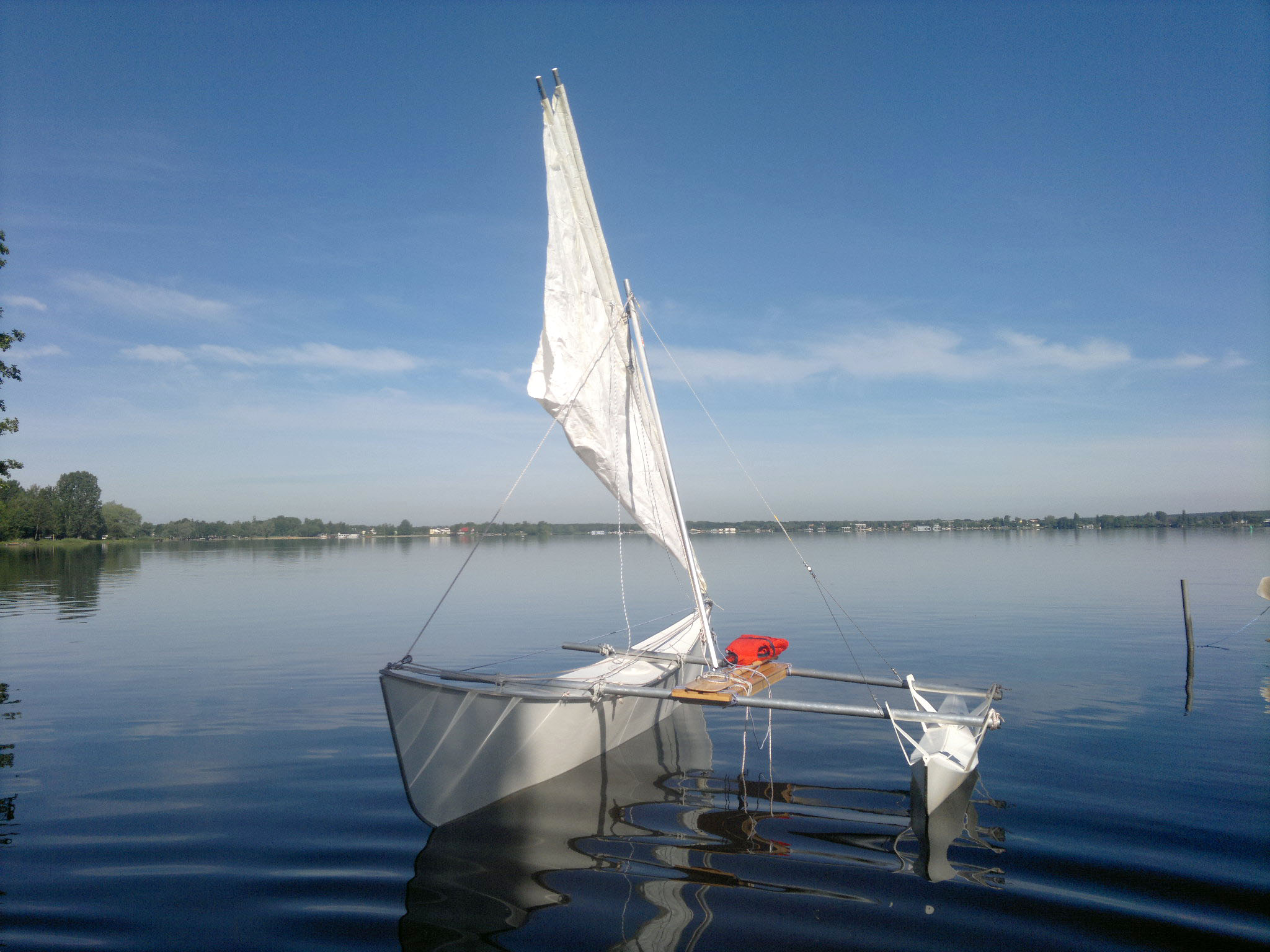
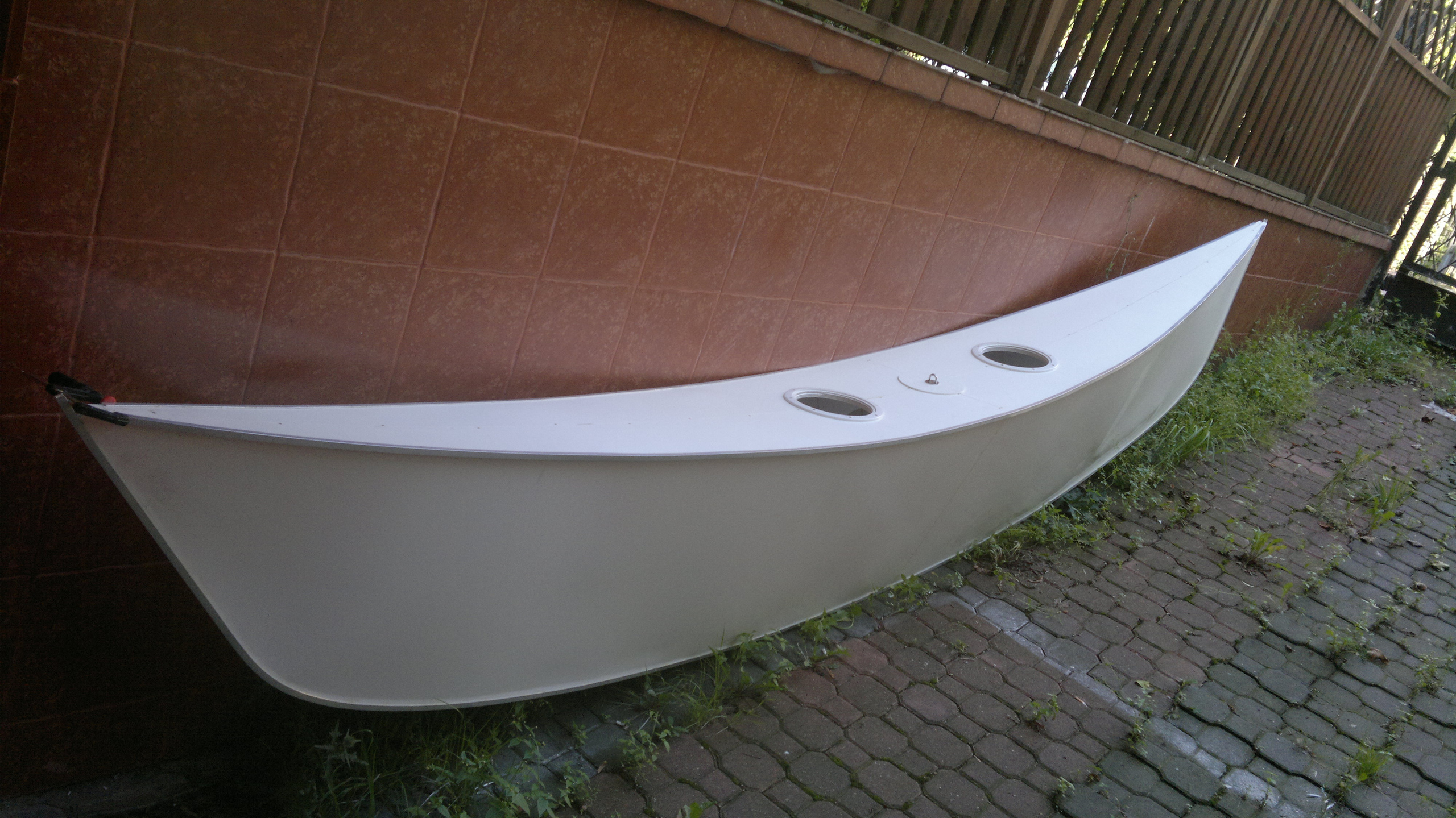
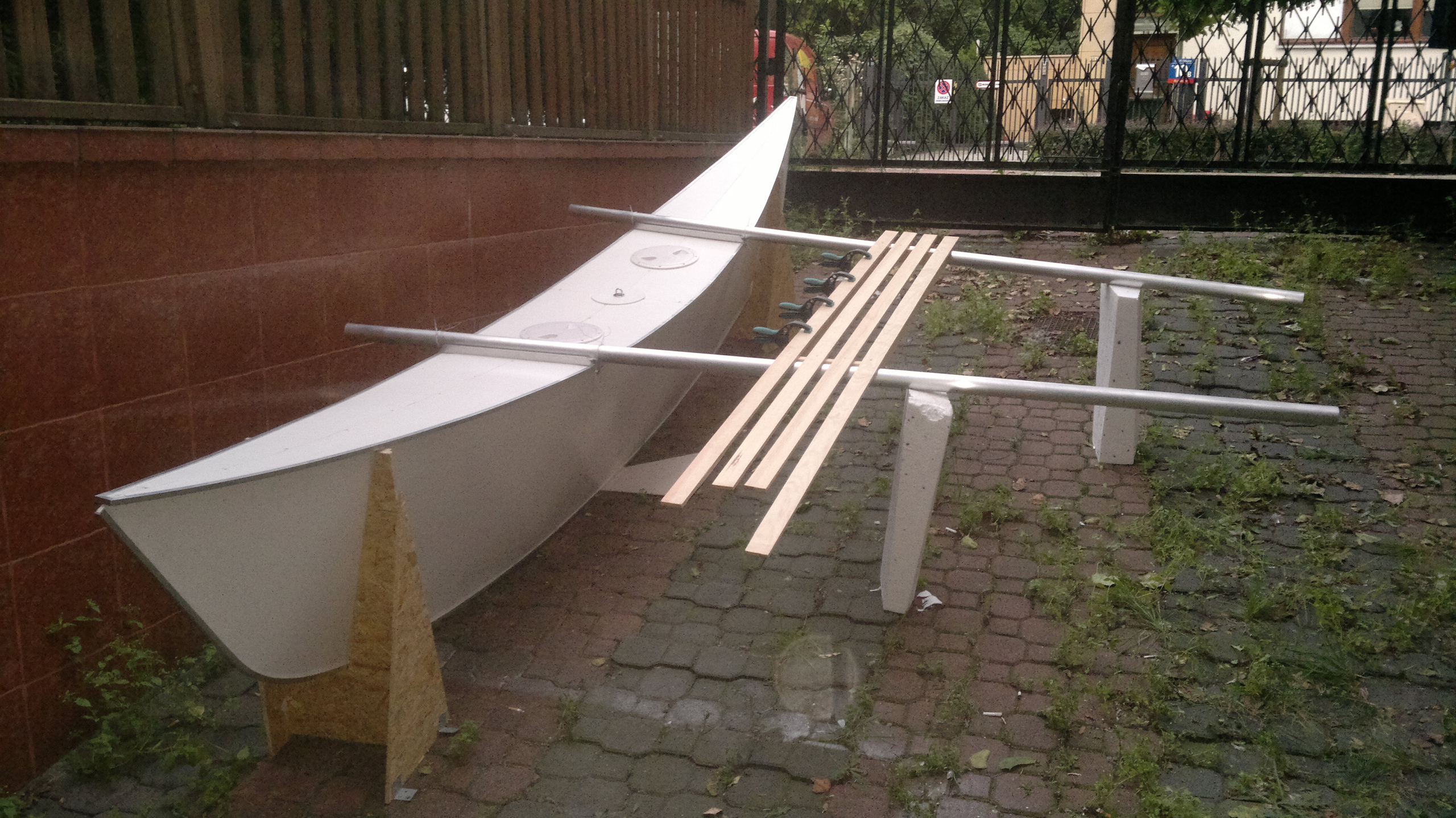
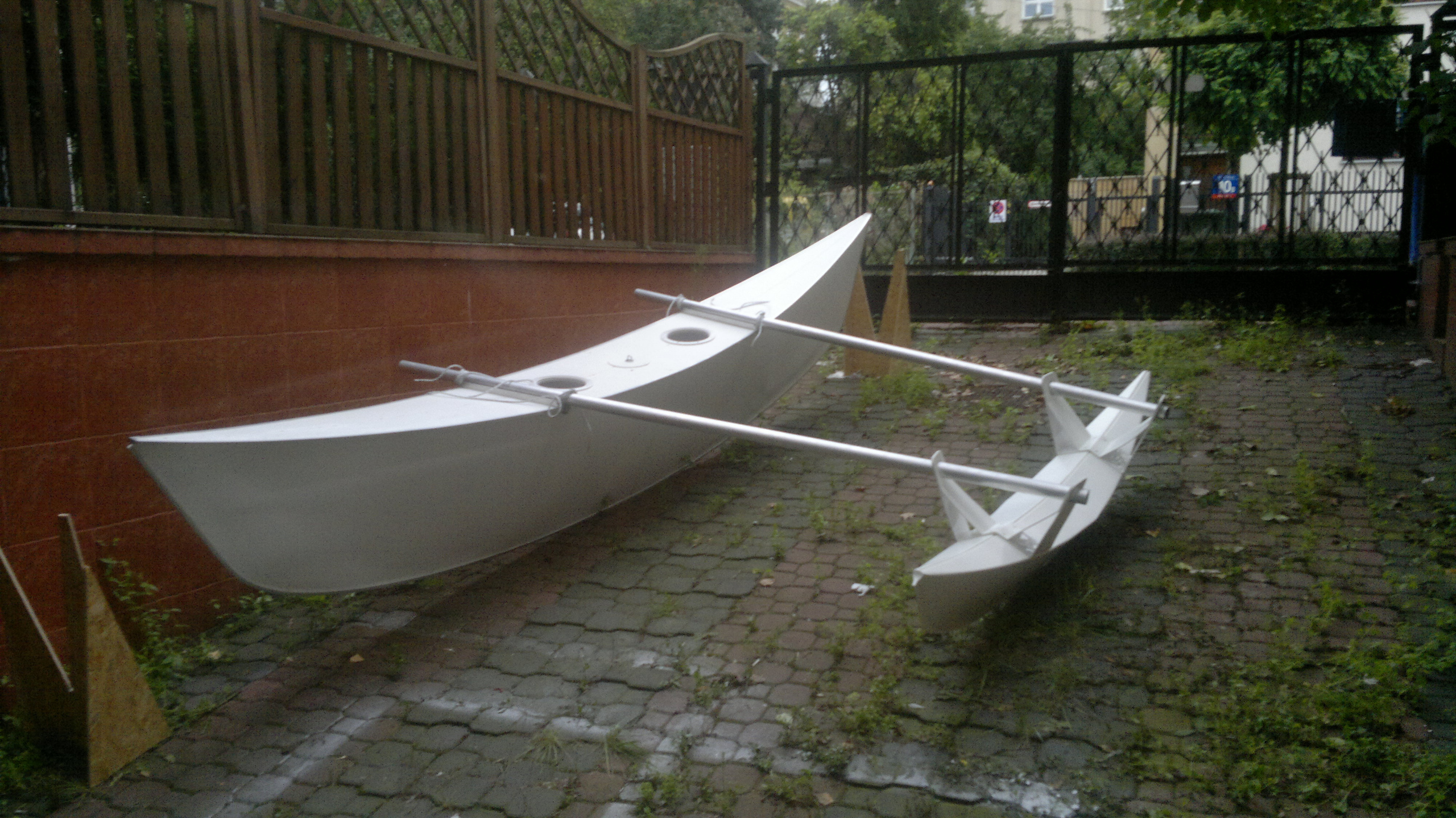
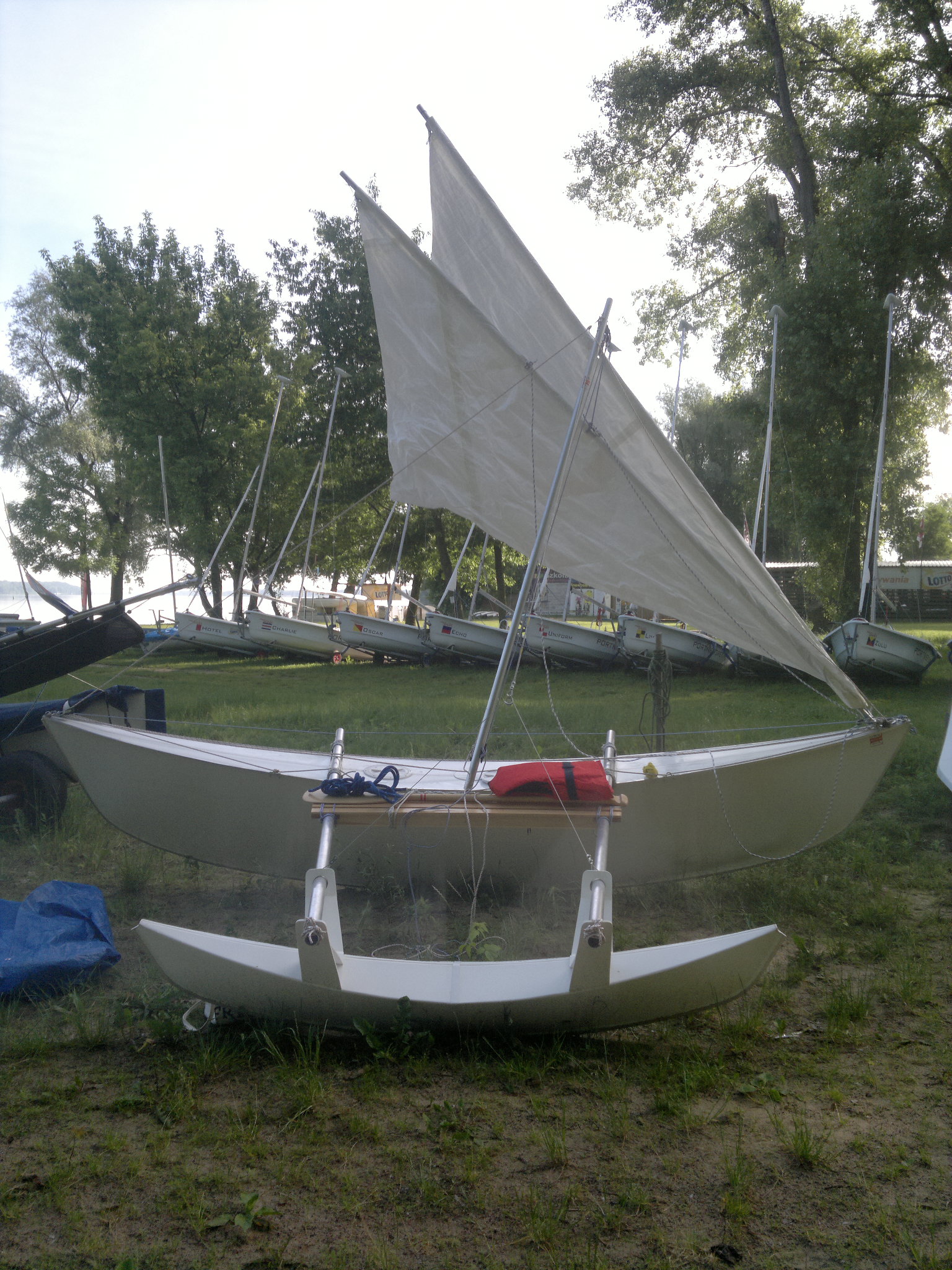
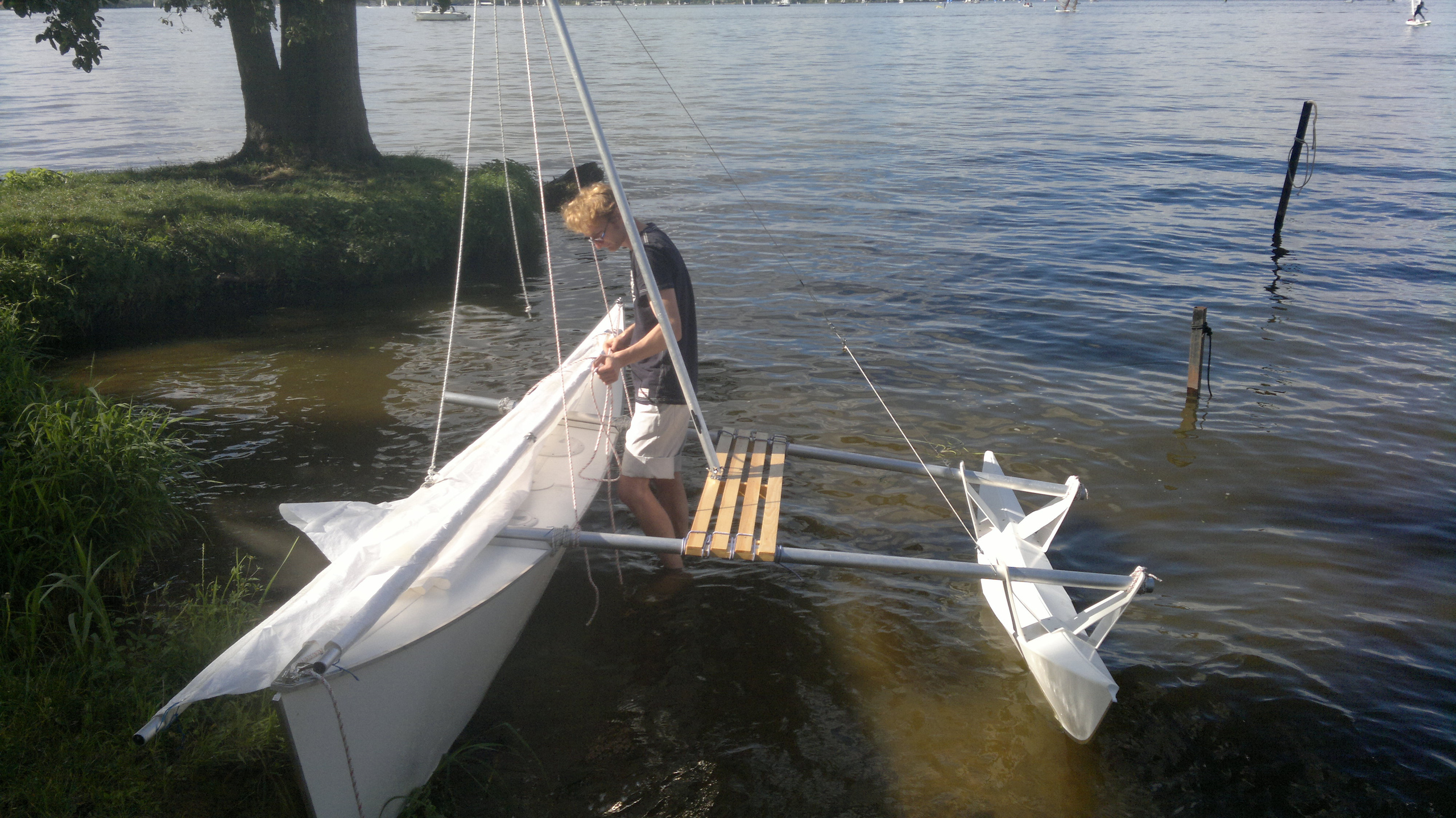
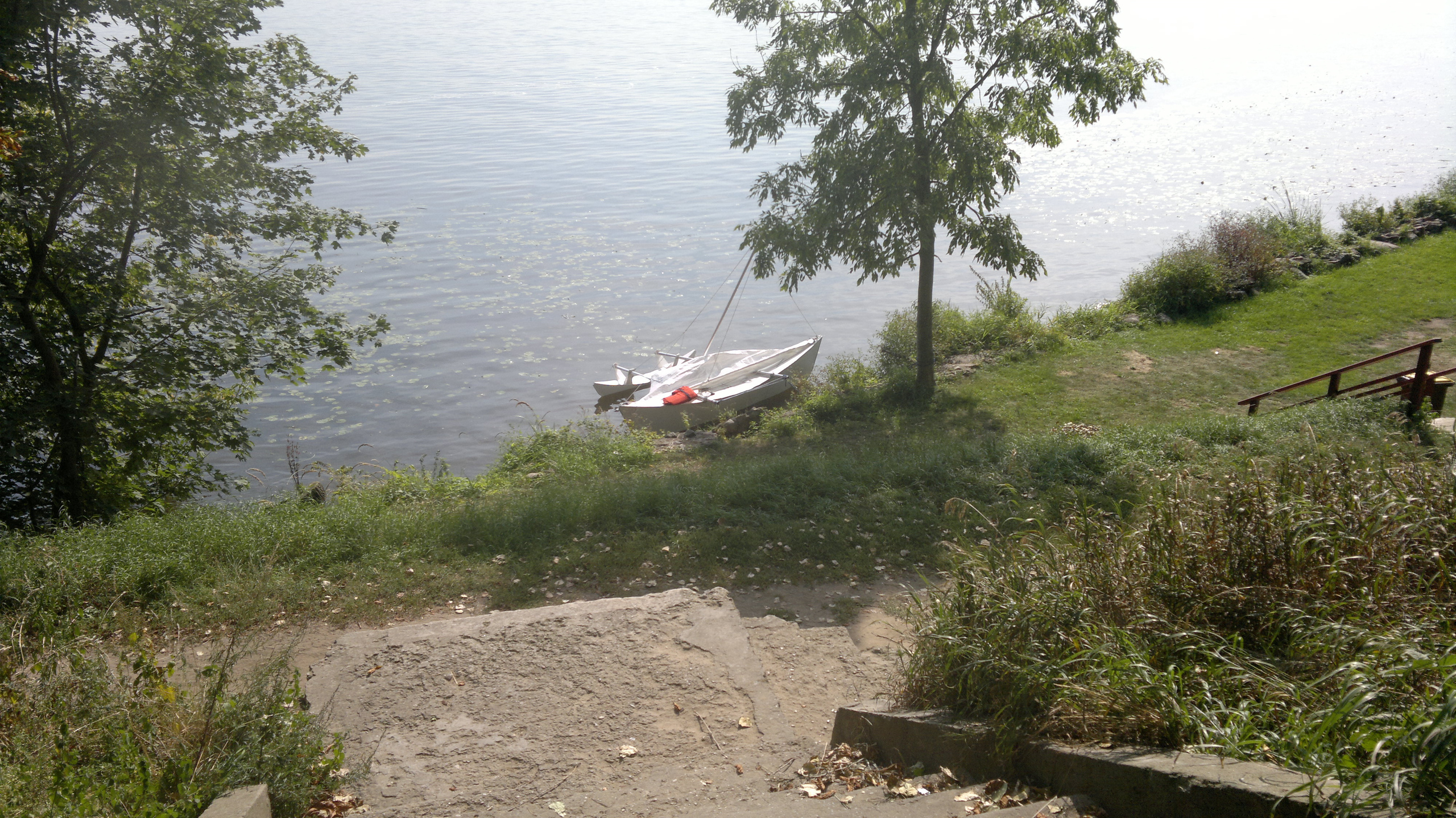
Basso brought together my passion for building and sailing. I set out to create a boat I could build myself and sail, and the project also became an experiment through which I developed my own method of constructing hulls from plastics.
I have been building boats since I was a child. At first, they were small models made from pine bark, followed by wooden constructions. As a teenager, I built my first model sailing boat in a local model-making workshop. At the time it seemed large and beautiful — and it still does.
Many years later, this interest led me to a small pond, where I had the chance to try a friend’s small proa, made from plastic and wooden battens. It was my first encounter with this type of boat, and I almost immediately knew it was what I had been looking for.
I wanted a single-handed boat: light, relatively inexpensive to build, and forgiving enough to accommodate the mistakes of a novice sailor.
About a year after that first encounter, I produced the first sketches. They were preceded by months of research into proa, followed by a wider exploration of Micronesia, its culture and its way of life in the Pacific.
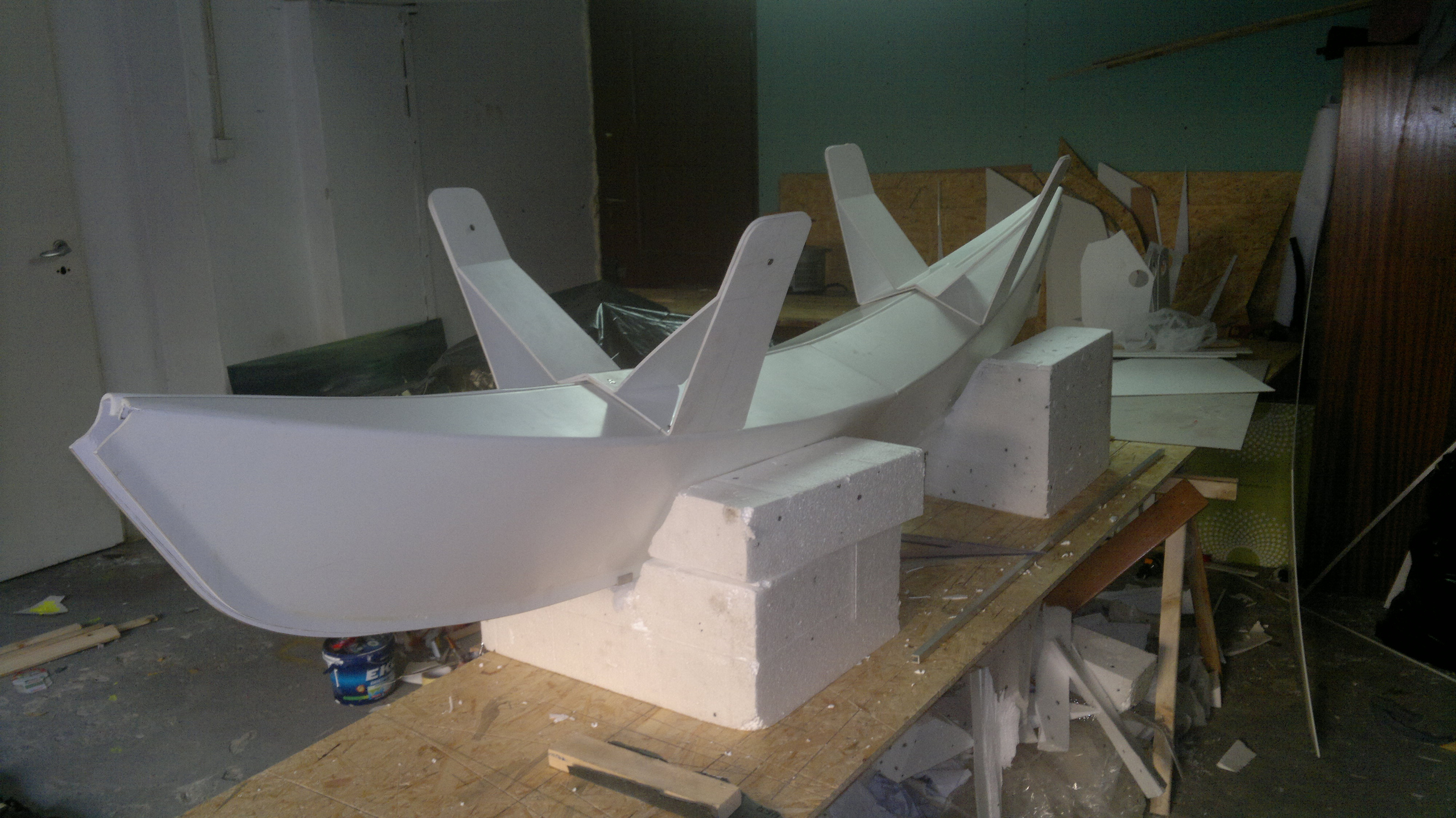
To begin building, I had to set up a workshop, acquire tools, find a suitable material and develop a method for forming and joining it. I chose ABS+PMMA — a relatively light and durable plastic, resistant to many substances and suitable for thermoforming.
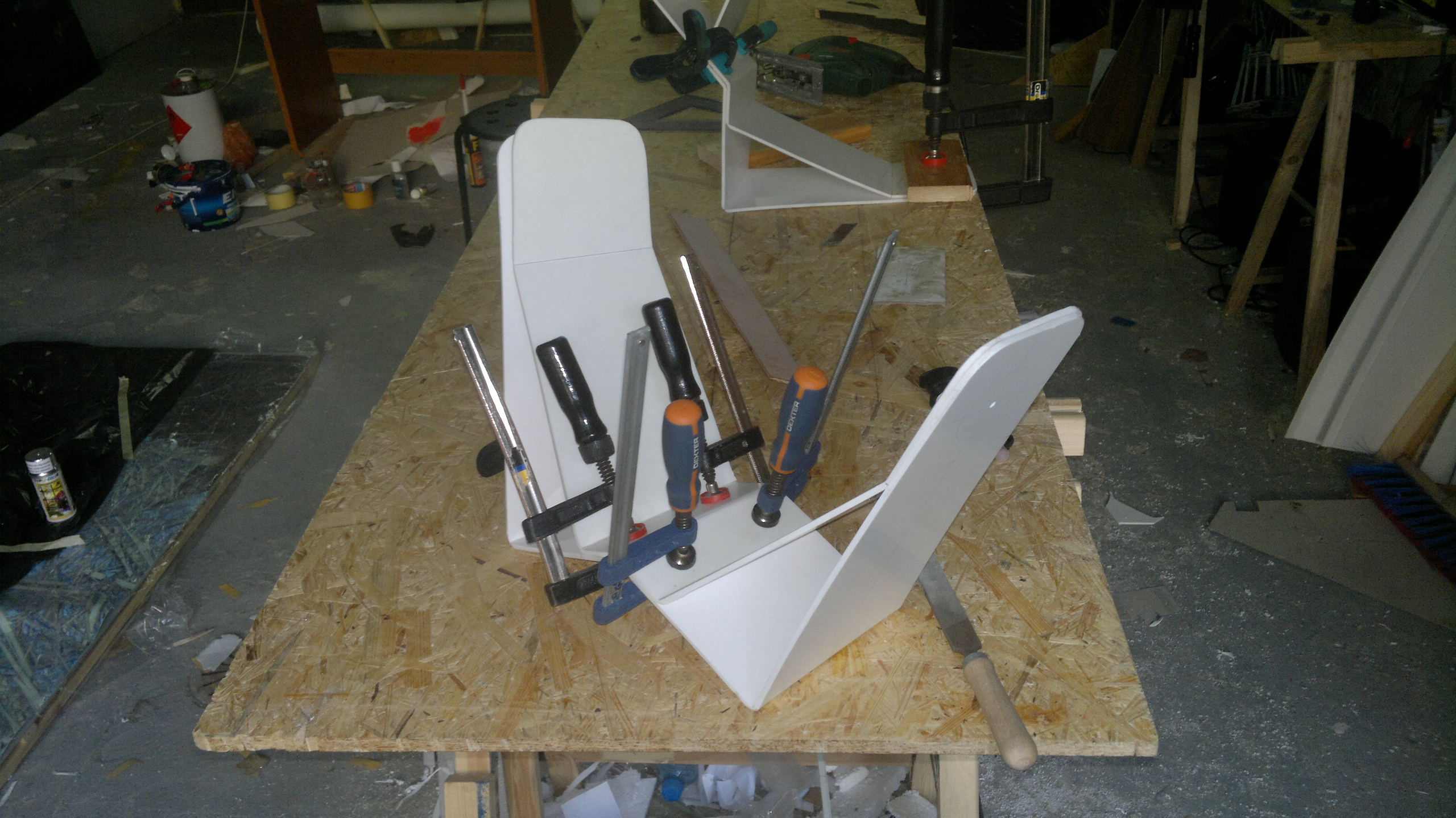
I developed a method for joining sheets at different angles. The edges of the sheets were thermoformed and then joined to one another or to the surfaces forming the hull. The method itself required a range of assembly jigs and bespoke tools.
Once these had been refined, the hull components began to take shape — first the outrigger float, followed by the main hull.
After around five months of work, the first version of the boat was launched on the Zegrze Reservoir.
The basic objectives had been achieved and I could begin sailing, although, as it later turned out, there was still a great deal of work ahead. During the following season, I met people who had been involved with proa for many years. Their experience and advice helped me introduce further improvements and develop Basso considerably.
That collaboration later led to PJOAwhich became a separate, long-term project.
Technology
The technology developed for Basso proved useful in designing smaller boats up to around 6 metres in length.
In a structure, ABS+PMMA behaves more like a membrane than a rigid shell. Under fatigue loading it can crack, so the structure needs to be designed with great care, avoiding high stress concentrations and notches. Some of these can already be introduced when thermoforming the edges.
The material also has an important advantage: the sheets already have their final surface finish. Once the hull has been assembled, it only needs washing and minor local touch-ups. This eliminates many hours of manual surface finishing that are required with traditional boatbuilding methods.
Two more boats were built using a developed version of this technology. The second, PJOA Laguna proved sufficiently robust and relatively easy to maintain. It is still sailing today and remains in very good condition.
For the time being, further development of the technology has been put on hold.